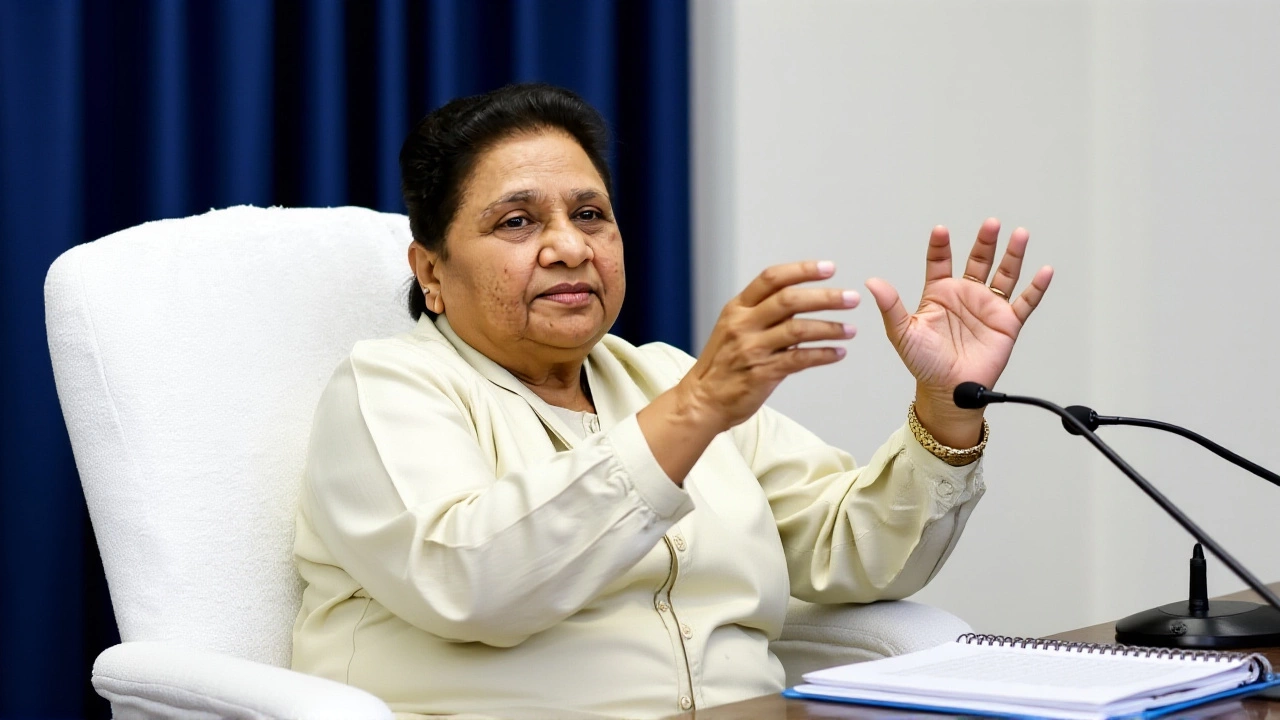
When Mayawati, the iron-willed supremo of the Bahujan Samaj Party, declared that a BSP government is destined to form in 2027, she wasn't just offering campaign rhetoric. She was issuing a command. Speaking to party cadres with unmistakable urgency, she added a chilling caveat: "Chook na ho" — there must be no mistake.
The statement, made during a closed-door meeting with office-bearers and grassroots workers, signals a major shift in strategy for the party that has been out of power in Uttar Pradesh for 13 years. Mayawati’s confidence stems from her assessment that public sentiment is swinging back toward the BSP, but she insists this momentum won’t sustain itself without rigorous, disciplined ground work.
The Anatomy of 'Mission 2027'
Here’s the thing about political comebacks: they rarely happen by accident. The BSP has formally launched what it calls Mission 2027Uttar Pradesh, a structured campaign aimed squarely at the upcoming state assembly elections. This isn’t a vague promise; it’s an operational blueprint.
According to reports from Live Hindustan and ABP Live, Mayawati has instructed party functionaries to work with their "full strength on the ground." The goal? To ensure the BSP forms the government in Uttar Pradesh for the fifth time. But how do you rebuild a political machine after more than a decade in the wilderness? You start at the village level.
The core tactic involves organizing chaupals — traditional village meetings — across the state. These aren’t just town halls; they’re targeted outreach events designed to reconnect with backward and extremely backward communities (OBCs). During these gatherings, party workers are tasked with enumerating the specific welfare schemes and infrastructure projects delivered during previous BSP governments. It’s a nostalgic appeal mixed with a performance review: remember what we did for you, and vote us back in.
Organizational Expansion Targets
But nostalgia alone doesn’t win elections in India’s largest democracy. That’s where the numbers come in. Citing a report in Navbharat Times, ABP Live revealed a startlingly specific organizational target: party office-bearers have been directed to induct between 100 and 150 new members into the district organizational executive committee in every single district.
And here’s the twist: these new members must belong to backward and most backward communities. This quota-driven expansion suggests Mayawati is trying to solidify the party’s social base while simultaneously broadening its leadership pipeline. If executed correctly, this could inject fresh energy into the party’s local machinery, which has arguably stagnated during its years out of power.
Why 100 to 150? It’s likely calculated to ensure adequate representation and mobilization capacity at the tehsil and block levels. In Indian politics, the district collector might hold administrative power, but the party president holds the votes. Strengthening that link is critical.
Public Sentiment and Political Context
Mayawati’s bold assertion that "public inclination in Uttar Pradesh is increasingly turning in favor of the Bahujan Samaj Party" reflects a broader anxiety among opposition parties about voter fatigue with the current dispensation. After 13 years away from the helm, the BSP is positioning itself as the viable alternative for OBC voters who feel marginalized or unrepresented.
However, the political landscape in UP is fiercely competitive. The Samajwadi Party, led by Akhilesh Yadav, remains a formidable force, while the Bharatiya Janata Party continues to dominate national narratives. For the BSP to break through, it needs more than just organized chaupals. It needs a compelling narrative that resonates beyond caste arithmetic.
Interestingly, YouTube videos circulating online suggest that BSP supporters are already discussing potential alliances and even speculating about the chief ministerial face for 2027. One video, titled "BSP supporters revealed the entire plan for 2027! Big statement on alliance and CM face!", garnered over 800 views within hours of upload. While these discussions may reflect internal enthusiasm rather than official policy, they indicate growing anticipation within the party ranks.
What’s Next for the BSP?
The coming months will be crucial. Can the BSP translate its organizational targets into tangible voter turnout? Will the chaupal strategy effectively counter the BJP’s digital dominance and the SP’s established network? Only time will tell.
For now, Mayawati’s message is clear: 2027 is not a distant dream. It’s a deadline. And she expects her workers to treat it as such. Whether this aggressive posture translates into electoral success depends on execution, timing, and the ever-shifting winds of Uttar Pradesh politics.
Frequently Asked Questions
What exactly is 'Mission 2027'?
Mission 2027 is the Bahujan Samaj Party's strategic initiative aimed at winning the 2027 Uttar Pradesh Assembly elections. It involves intensive grassroots campaigning, including village-level meetings (chaupals) to reconnect with backward communities, and a massive drive to recruit 100-150 new district-level executives per district from OBC backgrounds.
How long has the BSP been out of power in UP?
The Bahujan Samaj Party has been out of governmental power in Uttar Pradesh for 13 years. Mayawati and her leadership team are leveraging this period of absence to argue that voters need a change and to remind constituents of the party's past developmental record.
Who is the target audience for the BSP's chaupals?
The primary target audience consists of backward classes (OBCs) and extremely backward communities. The party aims to consolidate its traditional vote bank by reminding these groups of the welfare schemes implemented during previous BSP governments and addressing their current grievances.
Is Mayawati running for Chief Minister again?
While Mayawati has not officially confirmed her candidacy for Chief Minister in 2027, recent online discussions among supporters mention speculation about the "CM face." Historically, Mayawati has served as CM multiple times, but the party may consider other leaders depending on the political climate closer to the election.
What does 'Chook na ho' mean in this context?
"Chook na ho" translates to "there must be no mistake" or "don't slip up." Mayawati used this phrase to emphasize the critical importance of precision and discipline in the party's groundwork. She is warning her cadres that any error in strategy or execution could cost them the opportunity to return to power.