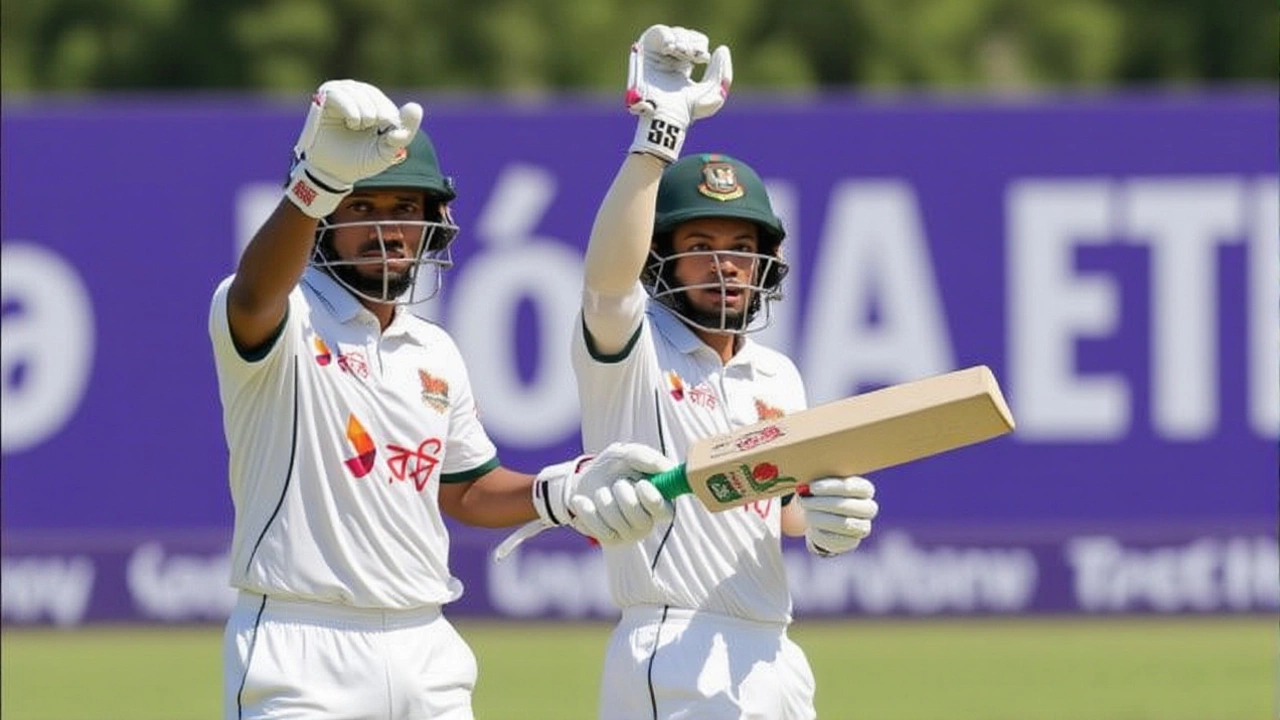
Bangladesh delivered a commanding performance to defeat Ireland by 217 runs in the second Test at the Shere Bangla National Stadium in Mirpur, Dhaka, completing a clean 2-0 series sweep. The victory wasn’t just about the margin — it was about dominance. Ireland, chasing 509, collapsed to 291 in their second innings, their fight ultimately undone by a relentless Bangladeshi spin attack and disciplined fielding. This wasn’t a fluke. It was the culmination of a meticulously executed plan, led by veteran Mushfiqur Rahim and powered by the rising star Litton Das, who crossed 3,000 Test runs during the match.
A Batting Masterclass on Day One
Bangladesh won the toss and batted first, turning what could’ve been a routine session into a statement. Their first innings of 476 was built on patience and precision. Mushfiqur Rahim, at 36, played like a man with something to prove — scoring 99 not out on Day One, his 40th Test half-century, and forming a crucial 100-run stand with Mominul Haque (47) for the fourth wicket. Meanwhile, Litton Das reached his fourth Test century — 100 off 158 balls — and etched his name into history as the 13th Bangladeshi to cross 3,000 Test runs. The crowd roared as he brought up the milestone with a square cut, a quiet celebration that said more than any fist pump.By tea, Bangladesh were 192/3, with Rahim and Mominul looking unflappable. The new ball, taken at 80.1 overs, barely made a dent. Ireland’s bowlers, especially Andy McBrine, toiled for hours. He took three wickets — Joy, Islam, and Mominul — but his economy of 4.72 runs per over exposed the gap in class. Matthew Humphreys bowled 20 overs without a wicket. That’s not just bad luck — it’s a sign of how well Bangladesh’s top order absorbed pressure.
Declaring With Purpose
Bangladesh didn’t just bat — they planned. Their second innings, declared at 297/4 in 69 overs, wasn’t about piling on runs. It was about setting a target that would stretch Ireland’s resolve. Mominul Haque’s 69 not out was the anchor. The declaration came with 14 overs left on Day Three. The message was clear: we’re not here to play for a draw. We’re here to win.Ireland’s first innings of 265 felt like a consolation. Harry Tector (50) was their lone bright spot, but the rest folded under spin. Mehidy Hasan Miraz, Bangladesh’s quiet assassin, picked up 4 wickets in the first innings. His control, his subtle variations — it was a clinic in off-spin mastery. Ireland’s top order, once so confident in their ODI form, looked out of their depth against the turning track.

Day Four: The Slow Death
The final day wasn’t dramatic. It was methodical. Ireland started their chase with hope, but the ball, older and heavier, turned viciously. Taijul Islam and Khaled Ahmed picked up wickets in clusters. At 176/6, Ireland still had a chance — but the pitch had turned into a minefield. Andy McBrine, unbeaten on 11, tried to fight, but the fielding restrictions were too tight. Every run came at a cost. When the last wicket fell — Curtis Campher lbw to Taijul — the stadium erupted. Not with chaos, but with quiet pride.It was the kind of win that doesn’t make headlines abroad — but it matters deeply at home. For Bangladesh, this was about proving they belong in the top tier of Test cricket. Not through flashy T20s, but through grit, patience, and spin.
What This Means for Bangladesh Cricket
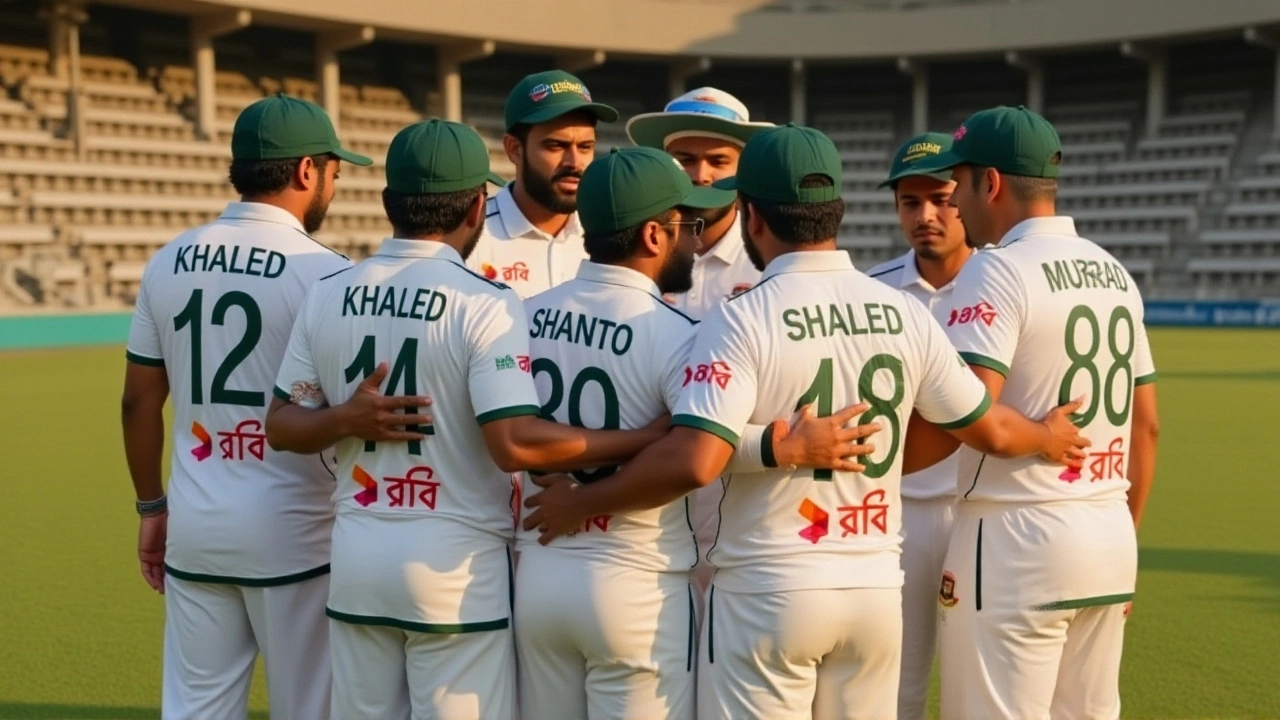
This series win isn’t just about two victories. It’s a turning point. Bangladesh have now beaten Ireland in two consecutive Test series at home — and this time, they did it without relying on a single superstar. Rahim’s leadership, Das’s maturity, Mehidy’s control, and the emergence of young pacers like Hasan Murad — it’s a team growing up.And let’s not forget the spinners. In a global game increasingly dominated by pace, Bangladesh’s ability to win Tests with four spinners is a masterstroke. They’ve turned their disadvantage — lack of raw pace — into a strength. The pitch at Mirpur, traditionally a spinner’s paradise, was played to perfection. The umpiring, led by Richard K. Illingworth and Scott J. Nogajski, was spot-on. Even the DRS reviews — five of them used — were handled with calm authority.
What’s Next?
Bangladesh now turn their attention to the upcoming home series against South Africa. This performance will give them confidence — but also pressure. The world will be watching. Can they sustain this level? Can they beat a top-5 side at home? The answer lies in how they handle the next challenge. For now, though, they’ve earned their moment.Ireland, meanwhile, face a reckoning. Their batting collapsed under pressure. Their spinners were outclassed. They need to rethink their approach to Test cricket — especially when playing in Asia. This wasn’t just a loss. It was a lesson.
Frequently Asked Questions
How did Mushfiqur Rahim’s performance impact the match?
Mushfiqur Rahim’s 99 not out on Day One anchored Bangladesh’s first innings and stabilized the middle order after early wickets. His partnership with Mominul Haque (100 runs) shifted momentum, and his calm leadership under pressure inspired the younger players. At 36, he showed that experience still wins Tests — especially in conditions that reward patience.
Why did Ireland struggle so much against Bangladesh’s spinners?
Ireland’s batsmen, accustomed to flatter pitches in Europe, were unprepared for the turn and bounce at Mirpur. Bangladesh’s spinners — Mehidy Hasan Miraz, Taijul Islam, and Shakib Al Hasan (in the first Test) — exploited the conditions with exceptional control. Ireland’s top order lacked the footwork and patience needed, and their lower order couldn’t adapt, leading to a collective collapse.
What milestone did Litton Das achieve during the match?
Litton Das became the 13th Bangladeshi to reach 3,000 Test runs during his century on Day One. He scored his fourth Test hundred — 100 off 158 balls — and now stands as one of Bangladesh’s most consistent top-order batsmen. His rise signals a new era of stability in their batting lineup, especially after the retirements of earlier legends.
How does this series win affect Bangladesh’s Test ranking?
Bangladesh’s 2-0 series win over Ireland, combined with their recent draw against New Zealand and win over Sri Lanka, has pushed them to 8th in the ICC Test rankings — their highest position in five years. They’re now just 12 points behind Sri Lanka, with a potential rise to 7th if they beat South Africa in their next series.
What role did the pitch at Shere Bangla National Stadium play?
The Mirpur pitch offered consistent turn from Day One, favoring spinners and rewarding patience. The ball gripped and kicked, making batting increasingly difficult as the match wore on. Bangladesh’s preparation — training on similar surfaces — gave them a clear edge. Ireland, coming from green pitches, had no such advantage, which was evident in their shaky footwork and poor shot selection.
What’s next for Ireland’s Test cricket program?
Ireland’s next Test is against Afghanistan in the UAE in March. They need to overhaul their batting approach for Asian conditions — more focus on footwork, defensive technique, and mental resilience. Without structural changes, they risk becoming a one-off Test team — strong in Ireland, fragile abroad. This series exposed the gap between associate nations and full members.